Quick answer
Hairdressing salon insurance is usually a bundle. General liability pays for client injuries like slips and for damage to their property. Professional liability pays for service mistakes. Property coverage protects chairs, dryers and stock, and workers' comp is needed once you hire. Your lease or booth rental agreement usually tells you which pieces and limits you must carry, so read it before you buy.
In this guide
- What your lease will ask the salon to carry
- Booth renters and suite renters: who covers whom
- What the "general liability" line actually pays for
- Why a color correction or chemical burn claim needs professional liability
- Your chairs, dryers and retail shelf: property and lost income
- Once you hire stylists: workers' comp and the other must-haves
- What salons typically pay
- Before you sign: what to ask the agent and check in the paperwork
Hairdressing salon insurance is usually a set of policies, not one. General liability pays when a client slips or their belongings get damaged. Professional liability pays for service mistakes like a bad color job. Property coverage protects your chairs, dryers and stock, and workers' comp kicks in once you hire stylists. Most owners figure out what they actually need from paperwork: the lease, a booth rental agreement or a suite operator's rules. Start there and match each request to the policy behind it.
What your lease will ask the salon to carry
The insurance section of a commercial lease is where most salon owners first run into terms like "additional insured" and "certificate of insurance." A certificate of insurance (COI) is a one-page summary proving your coverage is active. According to Beauty & Bodywork Insurance's salon FAQ, it can also list additional insureds, such as your landlord, to show your liability coverage extends to them. Salon owners usually get these requests from their landlord. Independent stylists usually get them from the salons and event organizers where they work.
Here's the part people miss. Putting the landlord's name on a certificate doesn't make them an additional insured. That status comes from an endorsement, which is a written change to your policy. Kinro's guide for salon operators says plainly that a COI alone doesn't grant it. If the lease calls for additional insured status and your policy lacks the endorsement, you're out of compliance, certificate or not.
Read the lease before you sign. Send the insurance section to a licensed agent with your quote request so the policy gets built around the lease language. Fixing it after the build-out has started can leave you waiting on a certificate while your opening date slips.
| What the paperwork says | Who usually asks | Coverage behind it | What to check |
|---|---|---|---|
| "Carry commercial general liability" | Landlord; salon owner (for booth renters) | General liability, alone or inside a business owners policy | Limits match the lease; products coverage is included |
| "Name us as additional insured" | Landlord; salon owner | Additional insured endorsement | The endorsement is on the policy, not just typed on the certificate |
| "Provide a certificate before move-in or before starting work" | Landlord; salon owner; suite operator | Certificate of insurance | Your legal business name, current dates, and wording that matches the contract |
| "Carry professional liability" | Salon owner; suite operator | Professional liability (errors and omissions) | Whether injuries from a service are covered or excluded |
| "Insure your own contents" | Landlord | Commercial property or a business owners policy | Limit covers chairs, dryers, tools and retail stock |
| Workers' comp (usually required by state law, not the lease) | Your state | Workers' compensation | Rules for your state and your number of employees |
Booth renters and suite renters: who covers whom
If you rent out chairs, the stylist in station three isn't automatically covered by your policy, and you probably don't want them to be. Kinro points out that your policy might end up responding to a renter's mistake, which could push up your insurance costs and put your business assets at risk. It also notes that a landlord may want proof that everyone working in the space has coverage. Requiring renters to carry their own insurance helps you meet that.
So put it in the rental agreement. Ask each renter to name your salon as an additional insured and give you a COI before their first client. Check that the policyholder name on the certificate matches the renter's legal business name. File the certificate with their agreement and set a calendar reminder for the renewal date.
On the renter's side, Beauty & Bodywork Insurance describes salon owners insurance as designed for owners with multiple stations and employees. Stylists who rent a booth, work as independent contractors or do mobile work generally need their own solo policy. If you're a renter sorting through options, the guide to general liability insurance for independent contractors explains how a standalone policy works.
What the "general liability" line actually pays for
General liability handles the everyday accidents that come with running a shop open to the public. The Insurance Information Institute describes a commercial general liability policy as covering non-professional negligent acts, and one of its examples is a customer tripping on loose flooring. In a salon, that's the client who slips on water by the shampoo bowls or catches a foot on a dryer cord on the way to the register.
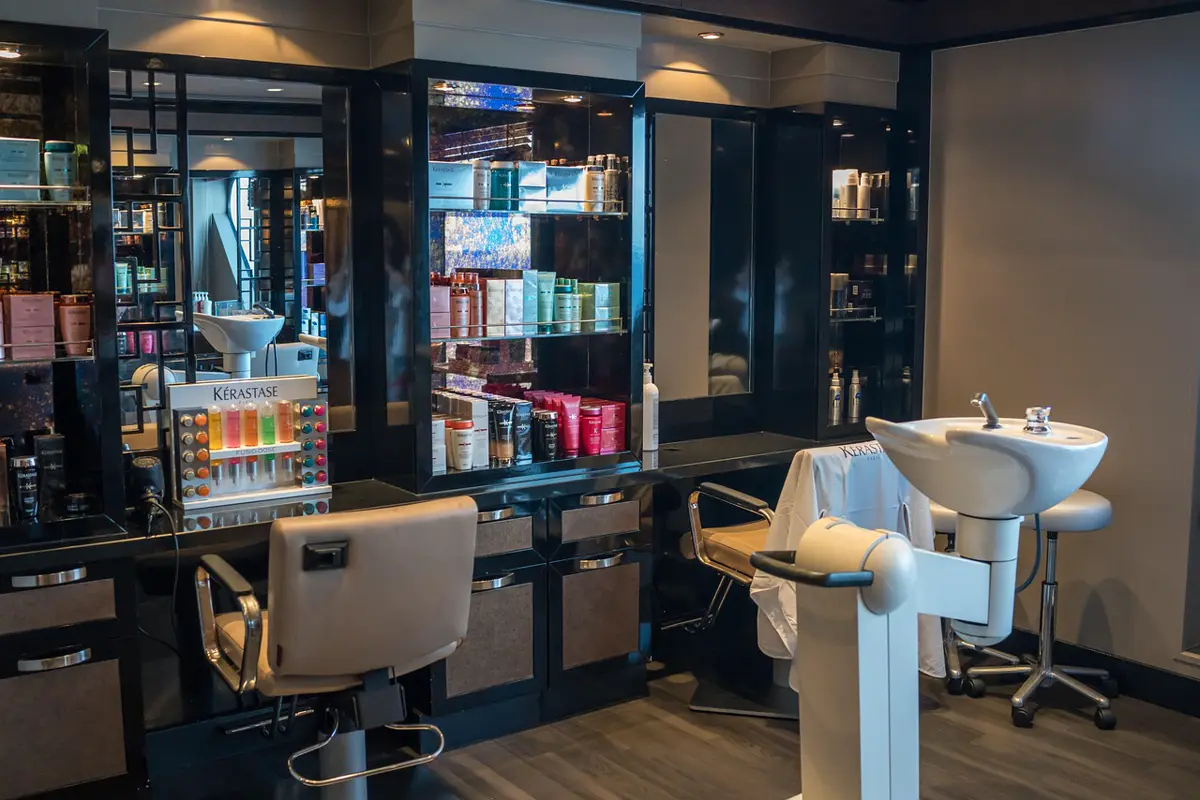
The Institute says the policy usually pays your legal defense costs and any damages you're found liable for, up to your policy limits. It also includes medical payments coverage for people hurt in an accident on your premises. Damage to clients' belongings lands here too, whether it's a coat ruined by color splatter or a bag knocked off a hook. Insureon notes that general liability often includes product liability, which can protect the salon if one of your products harms a customer. That matters if you sell shampoo, styling products or nail care items at the front desk.
If your limits come up short of what the lease demands, the Institute mentions that a commercial umbrella policy can add protection on top of general liability.
Why a color correction or chemical burn claim needs professional liability
This is the coverage that matches the actual work in the chair. Progressive Commercial describes professional liability, also called errors and omissions (E&O) insurance, as protecting a business from claims of negligence or mistakes in its services. Picture a relaxer left on too long, a bleach job that breaks hair, or a cut that sends a client to another salon for a fix and back to you asking for the money.
There's a real gap here, though. General liability is built for non-professional accidents, and Progressive says its professional liability insurance doesn't cover physical injury or property damage. That means a chemical burn on a client's scalp, a nick from shears or an allergic reaction to a dye can land in a gray zone between the two policies, depending on how each is worded. Salon-specific policies often close that gap on purpose. Generic forms might not. Beauty & Bodywork Insurance lists three core salon coverages: general liability, professional liability, and products and completed operations coverage (protection for harm that shows up after a service or product sale is finished).
Ask your agent directly which policy pays when a service injures a client, and get the answer in writing. Nail and beauty work raises the same question. Waxing burns, infections after a pedicure and reactions to lash adhesive all fall into this territory.
Your chairs, dryers and retail shelf: property and lost income
General liability won't pay for your own stuff. Progressive notes that it doesn't cover your business's property, but a business owners policy (BOP) can. The Insurance Information Institute describes a BOP as a package for small and mid-sized businesses that combines property insurance for buildings and contents, liability protection, and business interruption insurance. That last piece covers lost income when a fire or other covered disaster shuts you down, and it can also pay the extra cost of working out of a temporary location.
For a salon, contents means hydraulic chairs, shampoo bowls, dryers, color inventory, shears and the retail shelf. The Institute's property guide says a BOP covers most business property on or near the premises. It also says a BOP provides an automatic 25 percent increase in the business personal property limit to protect against a loss in the busy season, which helps if you stock up on retail before the holidays. Confirm with your agent how that works on your actual policy.
Business income coverage is the piece small salons skip and later wish they hadn't. If a burst pipe floods the floor, rent and payroll keep coming due while the chairs sit empty. The same guide notes this coverage can pay continuing operating expenses such as utilities and payroll.
Cutting hair out of a converted room at home changes things. The Insurance Information Institute warns home business owners not to assume a homeowners policy covers the business. The guide to business insurance for a home based business walks through that setup.
Once you hire stylists: workers' comp and the other must-haves
Hiring changes your legal obligations. The U.S. Small Business Administration says you may be legally required to buy certain types of business insurance once you have employees, and that the rules vary by state. In most states that means workers' compensation, and a few states also require employers to provide disability coverage. Workers' comp pays medical bills and lost wages when an employee gets hurt on the job. In a salon, that might be a wrist injury from years of blow-drying or a burn at the color bar. Every state sets its own workers' comp rules, so check with your state's workers' compensation agency or a licensed agent about who needs to be covered.
Be careful with labels. Calling a stylist a "booth renter" in an agreement doesn't settle whether they're really an employee. What matters is how the relationship works in practice: who sets the schedule, who books the clients and who supplies the products. If your renters work like employees, talk to an agent and a tax professional before a claim forces the question.
Vehicles are a separate matter. Insureon notes that most states require commercial auto coverage for vehicles a hair salon owns, which is worth knowing if you're a mobile stylist or run a salon van for supplies.
What salons typically pay
Prices depend on your location, payroll, number of stations, services and claims history, so treat published averages as rough guides. Insureon publishes these average monthly costs for hair salon customers who bought through its marketplace:
- General liability insurance: $35 per month
- Business owner's policy (BOP): $70 per month
- Professional liability insurance: $42 per month (Insureon puts this at $500 annually)
- Workers' compensation insurance: $63 per month
Insureon doesn't date these figures. A salon offering chemical services, extensions or a busy nail bar may be priced differently from a cuts-only barbershop, and lease requirements like additional insured endorsements or higher limits can move the price too. Get quotes once you know what the lease asks for, not before.
Before you sign: what to ask the agent and check in the paperwork
The SBA recommends working with a licensed commercial insurance agent to find coverage that fits your business. Bring the lease, any booth or suite rental agreement, and a list of every service on your menu. Then cover these points:
- Lease insurance section. Get the required coverages, limits and certificate wording in writing, and match the policy to them before you sign.
- Additional insured endorsement. Confirm it's actually on the policy, and get a copy of the endorsement along with the certificate.
- Service injuries. Ask which policy pays for a chemical burn, an allergic reaction or a cut, and whether any exclusion applies.
- Products and completed operations. Check that retail sales and after-service reactions are covered.
- Renters and stations. Find out whether booth renters are excluded and how many stylists or stations the policy assumes.
After that, make sure the property limit covers your chairs, dryers, tools and peak-season stock. Ask how long business income payments last and what counts as a covered shutdown. And confirm your state's workers' comp rules for both your current and planned headcount.
For more guides on stylists, barbers and nail pros, see the salons and barbers section.
Common questions
Do booth renters need their own salon insurance?
Often, yes. A salon owner may require chair renters to carry their own liability insurance and to show a certificate before they start working. The owner's policy may not be written to cover an independent renter's work, and a claim from a renter's mistake could land on the owner's policy and raise its cost.
Does a certificate of insurance make my landlord an additional insured?
No. A certificate is a summary that shows you have coverage. Additional insured status comes from an endorsement, which is a written change added to your policy. If your lease asks for it, have your agent add the endorsement, then make sure the certificate shows it.
Is a chemical burn from a color service covered by general liability?
Not always. General liability is meant for non-professional accidents, and some professional liability forms leave out bodily injury. Salon policies handle service injuries in different ways. Ask your agent which policy pays for a burn, an allergic reaction or a cut, and get the answer in writing.
Does my homeowners policy cover a salon in my home?
Don't count on it. The Insurance Information Institute warns home business owners not to assume a homeowners policy covers the business. Some insurers sell an endorsement or a separate business policy. With clients coming into your home for services, talk to an agent before you open.
Sources
- Get business insurance U.S. Small Business Administration
- What does a business owners policy (BOP) cover? Insurance Information Institute
- Property Insurance (Insuring Your Business: Small Business Owners' Guide) Insurance Information Institute
- Commercial general liability insurance Insurance Information Institute
- How much does insurance for hair salons cost? Insureon
- Beauty and Hair Salon Insurance Progressive Commercial
- Salon Booth Renter Insurance: What Should You Require? Kinro
- Salon Insurance FAQs Beauty & Bodywork Insurance
- Salon Insurance Types Beauty & Bodywork Insurance
Prepared by the Cover for Work Editorial Team and checked against the sources above. How we write and update guides. Spot an error? Tell us.