Quick answer
Most barber shops need general liability for customer injuries like slips, professional liability for harm from a service like a razor cut or chemical burn, and property coverage for chairs, clippers and build-out. If you have employees, you'll usually need workers' comp too, and state rules differ. Chair renters normally need their own policies. A business owner's policy covers property and general liability together, but it doesn't include professional liability.
In this guide
- What insurance does a barber shop actually need?
- A client got hurt in the chair. Which policy pays?
- Chair renters: whose policy covers their clients?
- Do you have to carry workers' comp for your barbers?
- Mobile cuts, house calls and the products on your shelf
- What barber shop insurance costs
- What to check before you sign a lease or buy a policy
Barber shop insurance is usually a bundle of three or four policies. General liability covers a customer who slips on clippings. Professional liability covers harm from the service itself, like a razor cut or a chemical burn. Property coverage protects your chairs, clippers and build-out, and workers' comp covers your employees if your state requires it. Picking the bundle is the easy part. The trouble comes from chair renters, house calls, product sales and lease clauses, and that's what most of this guide is about.
What insurance does a barber shop actually need?
Start with general liability, which pays when your business injures someone or damages their property. A walk-in trips over a cord, or a cape snags and tears a client's jacket. That's general liability. Then there's professional liability, which pays when the work itself causes harm: a straight-razor line-up that leaves a deep cut, a beard dye that triggers a reaction, or an infection a client blames on a dirty tool. If you own your gear or fixtures, you'll also want property coverage for the barber chairs, mirrors, stations, sterilizers, clippers and retail stock.
Plenty of shops buy a business owner's policy, or BOP, which packages property, general liability and business income coverage. Business income coverage replaces lost income when a covered loss like a fire shuts you down. It's a sensible start, but the Insurance Information Institute says plainly that BOPs don't cover professional liability, auto or workers' comp. In a barber shop, professional liability is the coverage you're most likely to use, so a BOP alone leaves the biggest gap wide open.
The U.S. Small Business Administration notes that you may be legally required to buy some types of business insurance, and some states require more than others. For most shops, the legal requirement is workers' comp once you hire. Leases and franchise agreements stack their own rules on top.
A client got hurt in the chair. Which policy pays?
This is where barbers get caught out most. Whether a claim falls under general or professional liability depends on what caused the injury, not where it happened. A client who slips on hair on the way to your chair is a general liability claim. A client whose neck gets nicked during a shave, or whose scalp burns from a relaxer or color, is a professional liability claim. If general liability is all you carry, that second claim may be excluded.
| Situation in the shop | Policy that usually responds | Where it can go wrong |
|---|---|---|
| Customer slips on clippings or wet floor | General liability | Rarely a problem if the policy is active |
| Razor cut, burn from a hot towel, chemical reaction | Professional liability | Excluded under a general liability policy or BOP alone |
| Fire or break-in destroys chairs and clippers | Property (often inside a BOP) | Underinsured if limits weren't updated after you bought new gear |
| Shop closed for weeks after a covered fire | Business income | Only pays when the cause is a covered property loss |
| Employee cuts a hand or develops wrist strain | Workers' comp | No liability policy covers your own employees' injuries |
| Client hurt by a renter's service | The renter's own professional liability | Renter has no policy, or it lapsed |
| Reaction to a pomade or beard oil you sold | Product liability (often inside general liability) | Limits for products may be low |
About that product row: NerdWallet notes that general liability or a BOP often includes some product liability coverage, but the limits may be low. If retail brings in real money for you, ask what limit applies to products.
Chair renters: whose policy covers their clients?
Lots of barber shops run on chair rent, and the insurance follows how the arrangement really works. The IRS describes a booth renter as someone who leases space from an existing business and operates their own business as an independent contractor (IRS Publication 4902). Renters set their own clients, prices and hours, so their work is their own risk. Your shop policy usually won't defend them when a client sues over a botched fade.
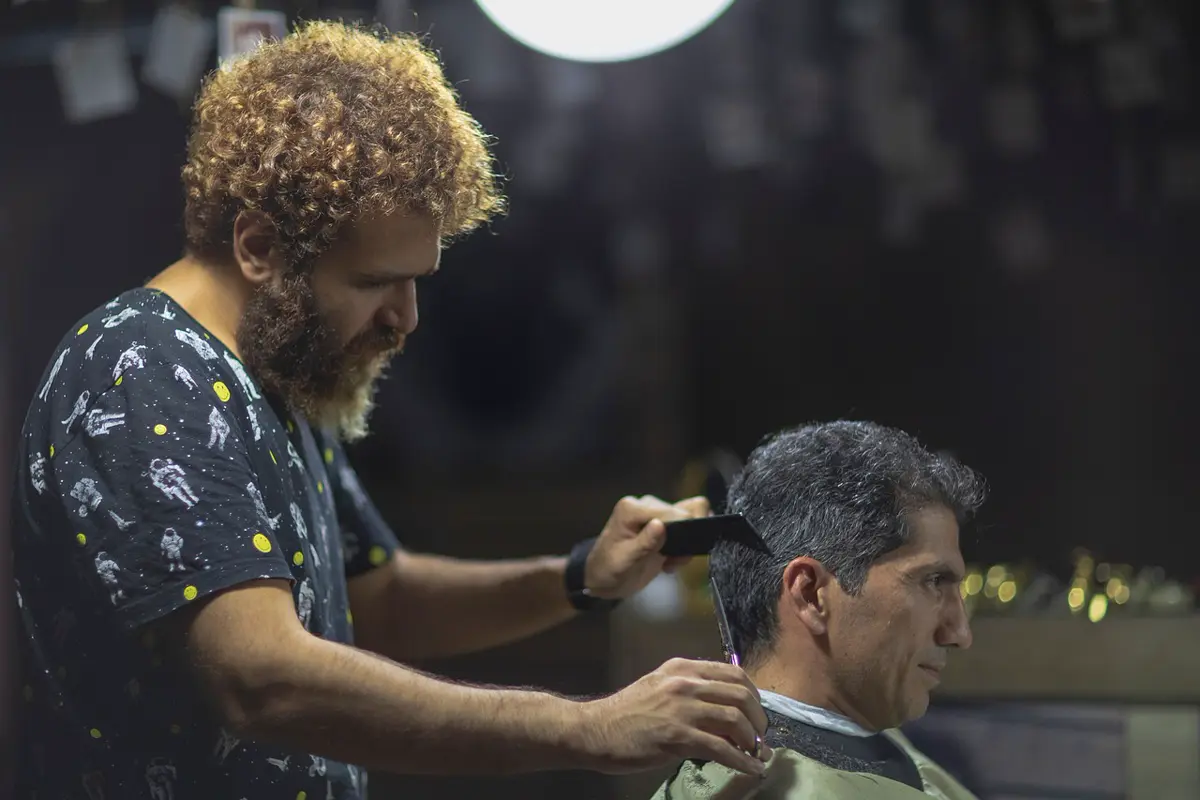
That doesn't mean it's not your problem. A client hurt by a renter will often name the shop in the lawsuit too, since your name is on the door. So build the renter's coverage into the deal. Write a requirement into the rental agreement that each renter carries general and professional liability. Get a certificate of insurance (the one-page proof of coverage an insurer issues) before their first day and again at every renewal. If your agent recommends it, have renters add your shop as an additional insured, which extends their policy to cover you for claims that come out of their work.
Then there's classification. If you set a "renter's" schedule, take their payments, set their prices and hand them your product, the IRS factors in Publication 4902 may point toward an employee rather than a renter. Now you may owe workers' comp and payroll taxes you never budgeted for, and your insurer could price your policy differently once the real setup surfaces at audit.
If you're a renter, flip that logic around. You're the one who needs individual barber liability coverage. Our guide on insurance for hair stylists walks through what shops and leases usually ask renters to show.
Do you have to carry workers' comp for your barbers?
Usually, yes, once you have an employee. But workers' comp is governed by state law, so the details depend on where you are. In New York, the Workers' Compensation Board says virtually all employers must provide workers' comp for their employees. Colorado's Division of Workers' Compensation says coverage is required for all employers in the state, with limited exceptions, and an uninsured employer can be fined up to $500 for every day without coverage. Other states set their own thresholds and exemptions, so check with your state's workers' comp agency or a licensed agent before you hire.
Barbers do get hurt on the job. They cut their hands on razors, slip on wet floors, and wear out their wrists and backs from long days standing. Your general liability policy won't pay for any of it, because liability coverage is for harm to other people. Workers' comp is what pays medical bills and lost wages for your own staff.
Front-desk staff, shampoo assistants and apprentices count as employees too. So might an "independent" barber you actually manage like staff, which brings us right back to the classification problem.
Mobile cuts, house calls and the products on your shelf
More barbers now take house calls, work film sets, groom wedding parties and run pop-up events. Two gaps show up quickly. First, your professional liability policy may be written for services at your shop address, so ask whether it covers work at a client's home or an event venue. Second, driving to those jobs raises an auto question. NerdWallet describes commercial auto as coverage for vehicles you own or operate for the business, such as a mobile barber van, and a personal auto policy may not respond the same way when the trip was for work.
Retail is the quieter risk. Sell pomade, beard oil or shampoo, and a customer who has a reaction can bring a product claim. Private-label products with your shop name on them deserve a closer look. Ask how your policy treats both the products you resell and the ones made under your own brand.
What barber shop insurance costs
Price depends on your state, payroll, square footage, chosen limits, number of chairs and claims history. Published averages give you a ballpark, not a quote.
Insureon, a broker, publishes median premiums for barbershop customers who bought through it. General liability runs $37 per month, or $440 per year, for limits of $1 million per occurrence and $2 million aggregate. A business owner's policy averages $68 per month, professional liability $50 per month (or $596 annually), and workers' compensation $70 per month.
NerdWallet reports barbers pay a median of $450 a year for general liability, based on data from the online brokerage Coverdash. MoneyGeek's 2026 report puts a starting bundle at an average of $96 per month and a recommended bundle at $233 per month. A staffed shop bundle averages $380 per month, which MoneyGeek says fits fixed-location shops with one to four employees. Workers' comp grows fastest as you hire, since it's priced on payroll. For more cost detail by setup, see hair salon insurance cost, because salons and barber shops are often rated in similar ways.
A cheap quote is often cheap because something's missing. Before comparing prices, make sure every quote includes professional liability and uses the same limits and deductible. Pitting a general liability quote without professional liability against a full barber package isn't a fair fight.
What to check before you sign a lease or buy a policy
Your lease often sets the clock. A landlord may want general liability at set limits, the landlord named as additional insured, and a certificate before you get the keys. Send the lease's insurance section to an agent before you sign, since it's much easier to change a requirement before the lease is final. The hairdressing salon insurance guide covers common lease clauses in more depth. The SBA's advice to find a reputable licensed agent and review your coverage every year suits barber shops well, because chairs, staff and services change fast in this trade.
Bring these questions to a licensed agent, or check them against the policy itself:
- Does this policy include professional liability for barbering services, including straight-razor shaves, hot towels, color and chemical straightening?
- Does professional liability cover work I do away from the shop, like house calls and events?
- How does the policy treat claims that involve chair renters, and does it require me to collect their certificates?
- Is product liability included for retail items, and does it cover private-label products?
- Does the property limit cover the full cost to replace my chairs, stations, tools and build-out today?
- Does business income coverage apply if a fire or water damage closes me, and for how long?
- Does my state require workers' comp for the staff I have, and are my renters set up in a way that could make them count as employees?
- Does the policy meet every insurance requirement in my lease, including additional insured status and limits?
If you can answer all eight with the actual policy wording in front of you, you're in good shape. If any answer is "I'm not sure," sort it out with your agent before the next client sits down in the chair.
Common questions
Is barber liability insurance the same as barber shop insurance?
Not exactly. Barber liability insurance usually means a policy for one barber that combines general and professional liability. Barber shop insurance is the wider package a shop owner buys. It often adds property coverage, business income coverage and workers' comp for employees.
Does my shop policy cover the barbers who rent chairs from me?
Usually it doesn't. The IRS treats a true booth renter as someone running an independent business inside your space, so the renter's work on their own clients is normally their own risk. Ask every renter for a current certificate of insurance. Have your agent tell you how your policy treats claims involving renters.
Do I need workers' comp if it's just me cutting hair?
Many states don't require it for a self-employed owner with no employees, but the rules vary by state. Once you hire even one barber or a front-desk person as an employee, check your state's rule. New York and Colorado, for example, require coverage for nearly all employers.
Will a business owner's policy cover a client's chemical burn?
Usually not. A business owner's policy combines property, business interruption and general liability. The Insurance Information Institute says it doesn't include professional liability, and a burn from a service is a professional liability claim. You'd need a separate professional liability policy or an endorsement that adds it.
Sources
- Barber Shop Insurance Cost Insureon
- What does a business owners policy (BOP) cover? Insurance Information Institute
- Get business insurance U.S. Small Business Administration
- Tax Tips for the Cosmetology and Barber Industry (Publication 4902) Internal Revenue Service
- Is Workers' Compensation Coverage Required? New York State Workers' Compensation Board
- Workers' Compensation Insurance Requirements Colorado Department of Labor and Employment
- Barber Business Insurance: Best Carriers and Coverage NerdWallet
- Average Barber Shop Insurance Cost (2026 Report) MoneyGeek
Prepared by the Cover for Work Editorial Team and checked against the sources above. How we write and update guides. Spot an error? Tell us.